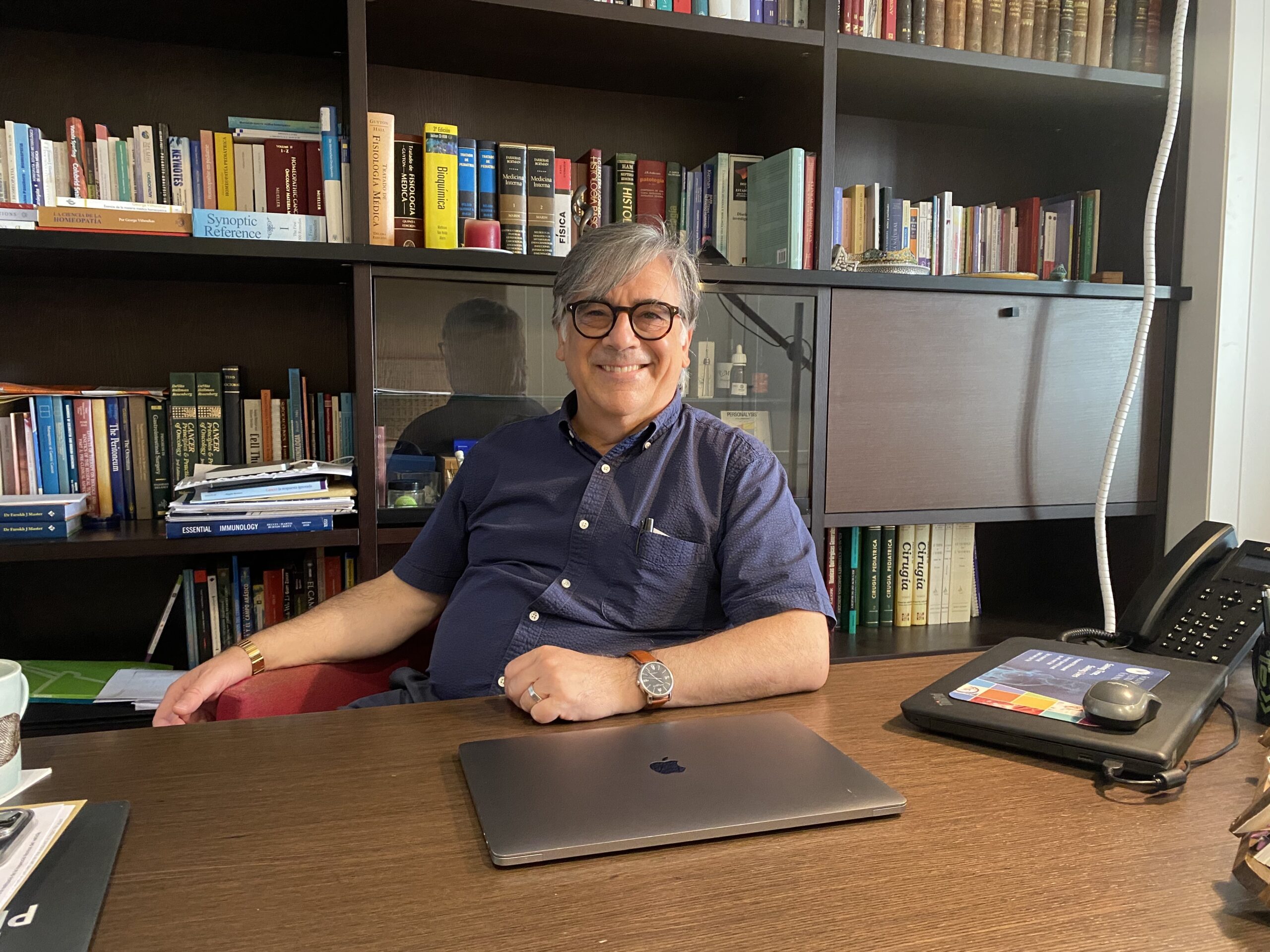
A Conversation with Dr. Joan Vidal on Histotripsy’s Transformative Potential
Across the world, solid tumors remain one of the most daunting challenges in patient care. Traditional treatment approaches—surgery, chemotherapy, and radiation—can often be invasive, imprecise, and taxing on patients, both physically and emotionally. For decades, clinicians and researchers have sought a new way forward: one that offers precision without incisions, efficacy without collateral damage, and healing without prolonged recovery.
Enter HistoSonics. Born out of pioneering research at the University of Michigan, HistoSonics uses histotripsy—focused ultrasound pulses—to mechanically destroy and liquefy tumors at a microscopic level. Unlike thermal ablation or traditional surgery, histotripsy is completely non-invasive, non-thermal, and incision-free—redefining what’s possible in tumor treatment. Early clinical trials have demonstrated its ability to precisely target and destroy tumor tissue while sparing surrounding healthy structures like critical blood vessels and other collagen structures, opening the door to a future where the standard of care is transformed from the ground up.
The promise of histotripsy isn’t just theoretical. Early patient outcomes have been striking—highlighting durable results, faster recoveries and minimal pain. This groundbreaking approach has the potential to change not only patient survival rates but also quality of life, offering hope to those who previously had limited options.
August 6th, 2025, HistoSonics announced its $2.25B acquisition by a consortium of top-tier investors—including K5 Global, Bezos Expeditions, Wellington Management and other new and existing investors—to accelerate global expansion of company’s breakthrough Edison® histotripsy platform and non-invasive tumor therapy.
Venture Investors Health Fund recognized this potential early on, backing HistoSonics with the vision that this was more than just another medical device—it was a chance to reshape the current standard of care. VI led the first investment round of HistoSonics to launch the company in December 2009, as well as every subsequent funding round. With continued support from VI and other forward-thinking partners, histotripsy has moved from the lab to clinical trials and into the hands of leading physicians worldwide.
One of those physicians is Dr. Joan Vidal Jove’, a renowned hepatobiliary surgeon based in Barcelona, Spain, and the principal investigator for HistoSonics’ European histotripsy clinical trial. Dr. Vidal Jove’s perspective combines deep technical expertise with a fierce commitment to patient care—making him not just an early adopter, but a true champion of this paradigm-shifting technology.
In the following interview, Dr. Vidal shares what initially drew him to histotripsy, his most memorable patient stories, and his vision for the future of this field. His insights reveal the human impact behind the science—and why he believes histotripsy represents a new era in tumor treatment.
As the leading physician in the HistoSonics trial, what initially drew you to histotripsy as a treatment, and how did it compare to other emerging technologies you’ve seen?
JV: When I first encountered this technique, what struck me most was its efficacy—both in terms of immediate results and overall precision. Compared to other technologies I’ve worked with, histotripsy is faster, more precise, and far more user-friendly. Many other systems can be cumbersome, slow, and not as intuitive for physicians.
With histotripsy, you can actually see the results right away. The precision in targeting tumors, the rapid destruction of the lesion, and the additional benefit of exposing tumor antigens to the immune system—which can sometimes lead to off-target effects that help shrink other tumors—all make it stand out. It truly feels like a winner.
What have you learned about the patient experience with histotripsy, from enrollment to treatment to recovery? Are there any stories that stand out?
JV: We have many memorable patient stories. The first thing I focus on is educating patients—this isn’t surgery, chemotherapy, or radiotherapy. It’s something entirely different, and they need to understand how they might benefit.
One common reaction we hear after the procedure is: “Did you actually do something? I don’t feel any pain. I feel the same as before.” Patients are often amazed at how seamless it feels.
There’s one story that stands out. One of our first patients experienced what we call an “off-target” immune effect—after treating one tumor, his other tumors began to shrink. This patient had already outlived his expected prognosis, and he came to me and said, “I was thinking of buying a car. Should I? Will I have time to enjoy it?” I told him, “How do you feel?” He said he felt great. His tumor had stopped progressing, and he was on very mild chemotherapy without major side effects.
He decided to buy the car and enjoyed it thoroughly. It was a beautiful moment that reminded me how much this technology can change lives.
As someone working at the intersection of innovation and patient care, what excites you most about the future potential of histotripsy?
JV: One of my motivations in life is to create things that transcend—to contribute to something bigger than myself. Histotripsy is that kind of project.
It’s not just about destroying tissue. One phrase I like to use is: “systemic therapy delivered locally.” When you perform histotripsy, you’re not only destroying the tumor, but also potentially activating systemic immune responses.
The way clinicians are adopting it—surgeons, interventional radiologists, urologists—shows how it’s changing practice across specialties. It’s not just an incremental improvement; it’s a paradigm shift in how we think about interventions.
When people at HistoSonics tell me, “You helped us so much as part of our first-in-human trials,” I always respond, “No—you helped me.” This experience has given me the opportunity to be part of transforming interventional treatments for patients, and that’s truly wonderful.
Histotripsy is non-thermal, non-invasive, and incision-free. How do you see this changing the standard treatment landscape for solid tumors?
JV: First, it changes our mindset as physicians. I often tell surgeons: “What if I gave you a scalpel that, every time you cut, attracted immune cells?” That would fundamentally change how we approach treatment.
Histotripsy doesn’t just destroy tissue and cause inflammation; it can generate a beneficial immune response. That changes how we think about interventions and how we treat patients.
Patients feel this difference too. We receive many emails from people asking if they can join the trial because they sense it’s more than just another tumor-destruction method.
From your perspective, what are the most important data points or trends you’re watching as this study progresses?
JV: We’re focused on precision—on treating the tumor without affecting surrounding healthy tissue. For example, in the liver, if you treat normal liver tissue, nothing serious happens. But in the pancreas, if you treat normal pancreatic tissue, you can cause pancreatitis, which is a severe complication.
The pancreas is anatomically deep and surrounded by delicate structures like the duodenum, bowel, and major blood vessels. That makes precision crucial. Ultrasound guidance helps us clearly differentiate the tumor from normal tissue, enabling us to place the treatment exactly where it’s needed.
One big question we’re exploring is: How wide should the treatment margin around the tumor be? In traditional surgery, we often remove an entire area to ensure clear margins. With histotripsy, we target only the tumor, so determining the ideal margin is an important ongoing research question.
This clinical trial was made possible with early investment from Venture Investors Health Fund and support from their Chief Medical Officer Dr. Joe Amaral. What has that collaboration meant to you and your team?
JV: For me, Dr. Joe Amaral has been a mentor and a teacher. He helped me think more openly and broadly, and taught me to consider perspectives I hadn’t thought of before.
Our relationship evolved from a professional one—he was my boss—to a true friendship. That’s the best outcome you can hope for from any collaboration.
When you imagine the long-term impact of histotripsy, what vision keeps you motivated?
JV: I see a future where histotripsy is used by every physician, across many specialties. Not just with the devices we have today, but also with new tools—handheld devices, probes for shallow or deep targets, applications in the brain, lungs, and beyond.
I remember when I first joined the HistoSonics team in 2015 at a conference in Tel Aviv. Charles Cain, one of the system’s developers, showed me their early work and said, “We need help growing this.”
When I first visited Ann Arbor in 2016, I realized this would transform how we approach these treatments. And now, just nine years later, we’re treating pancreatic tumors under a clinical trial and deploying systems worldwide.
The pace of progress is remarkable. Over the next 5 to 10 years, I believe histotripsy will permeate nearly every specialty.
Is there anything else you’d like to add?
JV: When HistoSonics approached me, I was at a moment in my career when I was starting to lose faith. The systems available at the time felt too cumbersome and limited. Histotripsy felt like a light at the end of the tunnel—it reignited my passion and reminded me why I chose this field.
Beyond treating patients, I now devote much of my life to advancing histotripsy. It truly changed my life.
Learn more about HistoSonics at histosonics.com. Stay informed about technologies that are changing the standard of care by subscribing to VI’s quarterly newsletter.
Note: This interview was lightly edited for readability.