How focused sound waves are reshaping surgery and improving the lives of our loved ones
Every so often, a technology emerges that doesn’t just improve care—it redefines it. Histotripsy is one of those breakthroughs.
Traditional surgery relies on cutting, burning, or toxic therapies to remove tumors or diseased tissue. Histotripsy, developed at the University of Michigan and advanced by the team at HistoSonics, offers a radically different approach: non-invasive, non-thermal, and robotically precise destruction of tissue using focused sound waves. There are no incisions. No radiation. No toxic side effects. Just precise, image-guided energy that liquefies tumors and allows the body to absorb them naturally.
We’ve believed in this vision from the beginning. Jim Adox, Executive Managing Director of Venture Investors Health Fund, discovered the technology at the University of Michigan and became one of HistoSonics’ earliest champions—spinning the company out, leading the Series A and B, joining the company’s board, and then serving as chairman for the last 13 years. His deep belief in the platform and its potential helped guide our decision to invest early and to stay deeply involved as the company progressed from research-stage to real-world patient impact.
On August 6th, 2025, HistoSonics announced its acquisition by a consortium of top-tier investors—including K5 Global, Bezos Expeditions, Wellington Management and other new and existing investors—to accelerate global expansion of company’s breakthrough Edison® histotripsy platform and non-invasive tumor therapy. Earlier this year, the company was honored with the National Venture Capital Association’s prestigious Excellence in Healthcare Innovation Award, recognizing the company’s transformative potential and commercial momentum. The technology has also been featured in Forbes, Fierce Biotech, and Becker’s Hospital Review—reflecting its increasing traction across both clinical and investor communities.
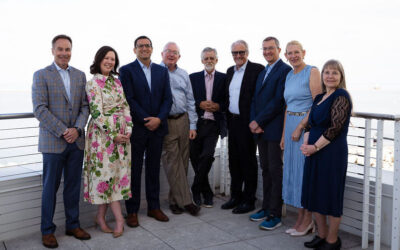
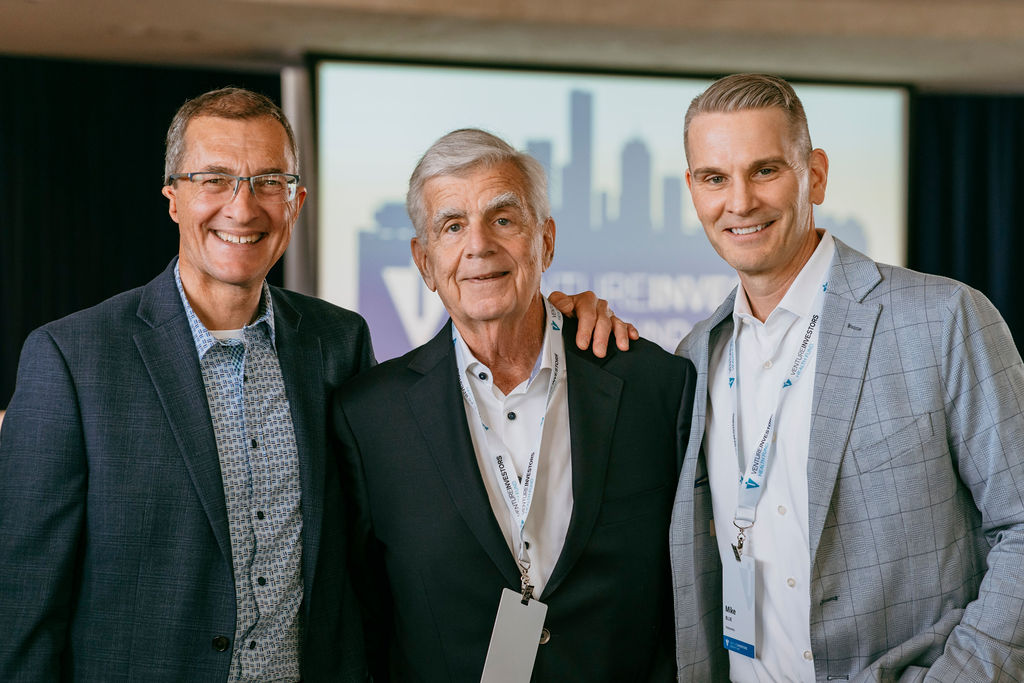
At our recent Annual Meeting, we had the privilege of hosting a powerful conversation between Jim Adox, HistoSonics CEO Mike Blue, and Bruce Sherman, a cancer patient who received two histotripsy treatments—one in Barcelona and one in California. Their dialogue captured the clinical promise, human impact, and emotional power of this technology in a way no slide deck ever could.
We’ve summarized some of the key takeaways from the conversation below. You can also experience the full story by watching the video or reading the full transcript at the end of this post.
1. Histotripsy is ushering in a paradigm shift in surgery.
HistoSonics’ Edison system enables non-invasive procedures that liquefy targeted tissue with robotic precision—without cutting, needles, or toxic side effects. This technology is not just a new tool; it’s an entirely new category of care, with applications across a wide spectrum of benign and malignant conditions.
As HistoSonics CEO Mike Blue said, “Our mission is to improve the lives of patients who are suffering from significant disease…Everything that exists in the world prior to October 6, 2023, was invasive, toxic or with side effects. That’s just reality… Now there’s histotripsy. It’s non-invasive, it’s non-toxic, and… with almost no known side effects. So this massive paradigm shift is in the process of happening.”
Photo Source: HistoSonics
2. The platform has the potential to treat almost anything—anywhere in the body.
From liver, kidney, and pancreatic tumors, to brain clots, Parkinson’s-related plaque, kidney stones, and more—histotripsy can be delivered precisely, painlessly, and scalably. Everything gets easier from the starting point, and the indications are nearly limitless.
Mike Blue: “We’re talking about a non-invasive treatment, without any toxicity, that can be delivered literally anywhere in the body—for both benign and malignant conditions…It goes on forever. Breast tumors. Thyroid nodules…Kidney stones. Gallbladder stones—we’ve got the ability to erode those into a fine dust.”
Mike Blue: “We’ve developed a platform… that’s currently treating in human cadavers—completely non-invasively—in the brain… It could have significant implications on Parkinson’s and epilepsy and a whole host of neurological disorders.”
3. Histotripsy is already in real-world use—and the outcomes are compelling.
With FDA clearance for liver tumors and pivotal trials underway for kidney and studies in pancreas and prostate, HistoSonics is on track to commercialize additional applications within 18 months. More than 50 centers in the U.S. are currently using the technology, with plans to double that by year’s end.
Mike Blue: “Histotripsy is now being used at 50 centers in the U.S.; by the end of the year, we’ll be in 100…We have orders for far more than that…We’ve treated over a dozen patients in our pancreatic tumor trial.”
Mike Blue: “We’ll be commercializing histotripsy for renal masses within the next 18 months.”
4. Real patients are experiencing real hope—and real results.
Bruce Sherman, a pancreatic cancer patient, shared his story of undergoing histotripsy in Barcelona and California. His pancreatic tumor shrank by 60–70% within a week. He experienced no side effects, no pain, and was back out to dinner the next day. His story underscores the emotional and human impact of histotripsy—transforming fear into hope.
Bruce Sherman: “I had my procedure on a Monday. They kept me overnight. Tuesday, we went out for a paella dinner… We had a great six days in Barcelona—with no side effects…If it weren’t for the black lines on my chest, I wouldn’t have known anybody did anything to me.”
5. Histotripsy could be the next foundational platform in medicine.
Just as radiation therapy changed the standard of care a century ago, histotripsy has the potential to define the next 100 years of non-invasive treatment. The Edison system is not limited by organ type or surgical complexity—and its ease of use radically democratizes access for clinicians and patients alike.
Mike Blue: “This is histotripsy. It’s the equivalent of 100 years ago, having a company that has the potential to own a platform like radiation therapy—but without the toxicity…We’re starting in the hardest place possible… Everything from here gets easier.”
Mike Blue: “There is literally nothing else like that in the world. Nothing existed like this before Edison.”
6. Early clinical results are accelerating FDA conversations.
Bruce’s participation in a Phase I pancreatic trial helped show histotripsy’s safety in one of the most challenging organs to treat. The overwhelmingly positive results are pushing HistoSonics to engage with the FDA faster than originally planned—opening the door to rapid market expansion in the U.S. and globally.
Mike Blue: “We’ve already shown some of these images to the FDA, and their surgeons were blown away…It gives us real optimism that we’ll get to market much faster in the U.S.”
7. Every investment dollar is amplifying impact.
From university-born innovation to commercial-stage medical device, the HistoSonics journey reflects the power of long-term, strategic investment in transformative technologies.
Mike Blue: “I just can’t tell you how meaningful every dollar you all have given to Venture Investors Health Fund that has come through to HistoSonics means to us. We take that very seriously. We don’t waste a single dollar that’s given to us.”
Mike Blue: “Every dollar has mattered to this company. It matters to these patients very dearly.”
Full Transcript Below
This transcript was lightly edited for readability.
Mike Blue: Good evening, everybody.
First, I want to thank Venture Investors Health Fund. I believe this is my seventh year at their annual conference. I wasn’t invited the first year—you’ve got to earn it. That’s fair.
I’ve been the CEO of HistoSonics now for eight years. From day one, they’ve been amazing partners—what you would want in an investor. They’ve been everything and more. And then there’s Jim Adox as chairman—he’s not just a chairman. He’s the best chairman I’ve ever worked with, and he’s become more than that—he’s become a dear friend.
And to many of you in the room who are LPs of Venture Investors Health Fund—some even direct investors in HistoSonics—I can’t thank you enough. We need every dollar to make something like this work.
As Jim said, the company was founded 15 years ago, but it was 10 years prior to that that it was invented at the University of Michigan. So we joke it’s a 25-year overnight success story. It takes that long to take something that was an experiment—when I started, it was a little more than that—but when Venture Investors discovered it, it was a therapy transducer hanging from rails on a ceiling, with an industrial-sized generator that would have never passed hospital 60601 safety testing, and there was zero automation.
So, it was: “Good luck. You’ve got this concept that could work—now make it work.”
I just can’t tell you how meaningful every dollar you all have given to Venture Investors that has come through to HistoSonics means to us. We take that very seriously. We don’t waste a single dollar that’s given to us. So thank you all.
We’re developing the future of non-invasive surgery.
When it was invented at the University of Michigan, it was a pediatric cardiologist who asked a group of ultrasound researchers: “Is there a way to do non-invasive procedures? Non-invasive surgery?” Today, we innovate invasively. We go into a pediatric patient and put a pin-sized hole in their septum—but it’s very invasive.
So the idea was: could you use ultrasound, completely non-invasively, to create surgery?
Well, the way they were using HIFU—High Intensity Focused Ultrasound—would have never worked. Because at the end of the focal point is heat, and thermal deposition would never have worked to accomplish this goal.
So, they completely inverted what the world knew as High Intensity Focused Ultrasound and invented histotripsy. And then, a year later, they coined the phrase “histotripsy.” And the rest is history.
Histotripsy received FDA clearance in October 2023, so it’s been a little over five quarters now. In full transparency, we didn’t know a whole lot prior to that final year of commercialization. We had treated a couple dozen patients. We knew it worked, it was safe, it was effective—at least in the short term.
But holy smokes. What we’ve learned over the last year—we’ve been given a gift. The company has been given a gift. The world will be given a gift.
Histotripsy is now being used at 50 centers in the U.S.; by the end of the year, we’ll be in 100. We have orders for far more than that. We’re delivering on the demand from physicians—but more importantly, the demand from patients has been overwhelming because it’s doing so much good.
For those who are new to the story, I’ll walk you through a quick animation of what the procedure looks like, what the system looks like, and then I’ve got a short video with physician and patient testimonials. As David Arnstein mentioned, I’m also incredibly honored to meet someone who’s becoming a dear friend. We only first Zoomed last week, and now I get to meet him tonight in person—a real patient, someone who’s experienced histotripsy and can talk firsthand about that experience.
The Edison system sits to the right of the patient. Over that robotic arm sits the therapy transducer. Our partner on the imaging side—how do we see into the body—is GE. We use their ultrasound to visualize the liver, find the target, and observe the treatment.
To the right is a water degasser. We need a medium because everything we do is ultrasound—from imaging to therapy. So it sits in a membrane over the patient—that’s our single-use disposable—filled with degassed hospital water.
We are radically democratizing the way surgery is going to be done. You don’t need the best surgeon who’s done thousands of Da Vinci robotic procedures. You don’t need hand skills or dexterity. Everything is done on a super high-fidelity, 4K touchscreen display—just what a physician would want in a radiology control room, but placed bedside. All controls are done via that touchscreen, with just a few knobs and buttons.
[Animation begins.]
They’re using what we call a space mouse to control the robotic arm. That’s the therapy transducer in the membrane filled with degassed water. The physician adjusts the size and dimensions of the treatment area with a few knobs, then literally hits a button and automates the treatment. They can watch it in real time—either via ultrasound or a diagram showing the red dot, which is the active histotripsy cloud moving through the prescribed volume.
This is where robotic precision matters. The system moves that tiny bubble cloud—the size of a grain of rice—through a large treatment area. You need that automation to deliver histotripsy.
The result: we liquefy the targeted tissue or tumors. That tissue is then absorbed naturally by the body—generally within 90 days, it’s gone. It’s like nothing else that exists today, unless you were to surgically remove it.
And then—it’s over. No pressure, no incision. The patient wakes up, and they go home. They return to their quality of life.
We’ve learned a lot now that we’re commercial in liver tumors. We’ve just begun our pivotal kidney tumor trial. We’ve treated over a dozen patients in our pancreatic tumor trial. In 2026, we’ll begin treating prostate.
What we’ve seen in the last 12–15 months is that there’s almost nothing we can’t do.
We believe the future of surgery—of procedures—is non-invasive. Whether it’s removing a skin lesion or treating tumors deep in the abdomen, it can all be done with a transducer like this—completely non-invasively. That means eliminating surgery altogether.
We know this will massively expand treatment options. We have patients today who had no other options before histotripsy. We hear it every day.
Patients are going to demand non-invasive options. Our mission is to improve the lives of patients who are suffering from significant disease.
This starts with Bruce.
Bruce and I were talking about this. My dad, unfortunately, passed away years ago from pancreatic cancer. If he had woken up and found histotripsy online, the hope that would have given him…
Our patients go to the hospital with hope. Not like a knee replacement, where you know you’re going to suffer before it gets better. Our patients are hearing from others: you can get treated non-invasively and go back to your life. That’s the hope.
But then the question becomes—can we improve their quality of life? Can we reduce the tumor? Reduce the pain?
There’s a huge market just in palliation—making patients feel better. And ultimately, we want to extend their lives—and one day, be part of their cure.
This is a paradigm shift.
My dad went through that moment: “Mr. Blue, the medication isn’t helping. Get your affairs in order.”
Why? Because every existing option before October 6, 2023, was invasive, toxic, or had side effects. Think of any treatment—they all fall into those categories.
Now there’s histotripsy. Non-invasive. Non-toxic. Almost no known side effects.
This paradigm shift is happening. It won’t happen overnight—but it’s happening.
So next, I’d like to show a short video of some of our physicians and patients—and then introduce Bruce, who’s had tumors in both his liver and pancreas treated with histotripsy.
[Video plays, Disclaimer appears]
“The difference—the contrast—from being post-surgery, where it was like, ‘Everybody leave Mommy alone. Mommy’s just got to lay down. I’m in lots of pain, to, like, ‘No, Mommy can take you to the bathroom on the beach,’ or ‘We can go look for seashells.’ The contrast was huge.
“It was kind of mind-boggling. I had moments where I thought, “Okay, is this actually happening? Is this real?” And then it was like—yep, this is real. And I want this again, if I need it.”
“Histotripsy changed my life for the better, because it’s given me the knowing of more life. I’ve seen my grandchildren. If I hadn’t followed the histotripsy trial, where would I be?”
“We are being very effective at controlling tumors, especially with pretty minimal side effects.”
“No pain. No intrusion into my body. No nothing. No cuts. Nothing. I just felt like I’d had a good sleep. That was it. It still hasn’t hit me what a miracle it is.”
“I was running out of options, and I was reluctant to go through some of the same things I had before. I wondered if my body could take it anymore. It’s been about nine months since I had histotripsy. I had no pain. There were no incisions. I woke up, and I could do everything I did before. I was just so thankful.”
“The tumor board had discussed my options, and currently, histotripsy is the only one I have left. When I was told there was no hope, the worst part was driving home to tell my children, my friends, my family. Histotripsy gave me hope again—having been told there was no hope.”
“Basically, I was told to go home and get my affairs in order. Inoperable. Incurable.I had a follow-up scan 12 weeks post-histotripsy, and that showed drastic results in the liver. I was given that hope—the hope you need to fight and to continue.”
“I’m going to be here for a long time. I’m going to see my grandchildren one day.”
“In time, this technology is likely to replace what we call standard treatment today.”
[End of video]
Mike Blue:
Who’s cutting onions? Yeah, I can watch that hundreds of times—and I have. And I will say: those patients—thank all of you again. Every dollar has mattered to this company. It matters to those patients very dearly.
It’s almost unbelievable how this came together. I think it was two weeks ago that I was even made aware of Bruce and what happened.
Bruce is the first patient in the world to have had two histotripsy treatments—in two different organs. He was part of our pancreatic tumor Phase 1 study in Barcelona, Spain, and then came back to the U.S. and just a couple of weeks later had his liver tumors treated.
That is the future of HistoSonics.
You’ll go into a procedural room, and if you have multiple tumors in multiple organs, they’ll just be zapped—completely non-invasively. It’s no longer science fiction. We have a person in the room who just went through it.
So with that, I’d like to introduce Bruce Sherman—my friend and an amazing human being. Because without people like Bruce—who are willing to be first and courageous—we don’t learn as a company. We don’t grow.
So with that: Bruce, welcome.
Bruce Sherman:
I want to start off by saying—and I told this to both Mike and Jim—I’m an emotional person to begin with. But when I was diagnosed in July of last year, it seems I’ve taken it to a new level. So I apologize ahead of time for a tear here or there.
I was diagnosed with pancreatic cancer that had spread to my liver on July 16, 2024.
I’ve been treated with chemo since then by a phenomenal oncologist in Des Moines, Iowa, who has treated my wife for 28 years. She’s a two-time breast cancer survivor.
Then we got a phone call—I don’t remember the exact date, but David might—from David Arnstein, saying, “This is something you ought to check into.”
It was HistoSonics. And histotripsy. And the Edison machine.
My oncologist didn’t know anything about it. Nor did I.
But I was very fortunate—he’s the kind of doctor who, as I keep saying, was like a dog with a bone. As soon as he heard about it, he wanted to know everything.
The first thing we did was contact Kevin Burns, who you saw in the video—the doctor who looks like a surfer. And yes, he looks like that in person too.
We talked about treating my liver tumor, and Dr. Burns said he’d do it anytime if I came out to California from Iowa. But then he said, “You ought to check out the clinical trial going on in Barcelona, Spain, on the pancreas. If you can get into that, do it first—because once we do the liver, you won’t qualify for the trial.”
So my oncologist got on the phone and called Dr. Santiago Sánchez-Cabús—I think that’s his full name—but everyone calls him Santi. He’s a wonderful, wonderful human being.
They exchanged emails, texts, calls—many of them—and within two weeks, he had all my scans and data. We were in Barcelona.
On March 18, I had the treatment. A week later, on the 25th, they did a scan before I could leave Barcelona.
Let me backtrack: the treatment was on a Monday. I stayed overnight. Tuesday, we went out for paella. It was wonderful.
In the middle of dinner, we got a text from Santi asking, “How was the paella?”—it was a restaurant he had recommended. We said it was great. Then he said to my son, “Remind your dad not to eat too much—I put a big hole in his pancreas yesterday!”
We spent two days in Valencia after that. My wife dragged me down Garcia Street shopping. We had a great six days in Barcelona—with no side effects. Absolutely none.
I told Mike: if it weren’t for the black lines on my chest, I wouldn’t have known anybody did anything to me. Just amazing.
The scan showed about 60–70% of the pancreatic tumor was gone. That was incredible.
Jim Adox:
What’s amazing is—who turns a cancer treatment into a vacation? But that’s really what you did. And it’s amazing because that’s how good you felt.
Bruce Sherman:
Yes, absolutely. I had no idea going into it. They said there would be no side effects—but it’s kind of hard to believe that, when you hear what’s going to happen. That there won’t be some side effect or lingering something. But there hasn’t been.
I have a scan this Thursday. I think it’s roughly every two months—they do a scan and send it to Barcelona, along with bloodwork. That’s required as part of the clinical trial.
And while I was in Spain, my oncologist—who, by the way, practices under the University of Iowa, which owns his clinic—went to them and said, “We have to get one of these machines in the state of Iowa.”
I know he’s going to push for it. And I think there’s actually going to be a demo trial in June, coming up next month. Hopefully that happens, so Iowans don’t have to travel halfway around the world to get this treatment.
As soon as we got back, my oncologist contacted Kevin Burns again in California and said, “Bruce is back.” And we set up a date.
Two weeks later, I was in California. The good news is, although chemotherapy is tremendously hard on the body, the chemo I had before shrunk my liver tumor by about 50% over six months. So that was already a good result.
Then I had histotripsy out in California, and Kevin was able to shrink the liver tumor by another 25–30%.
I’m eligible—if I want to do it again. I’m back on chemo now, on the same treatment protocol I was on before these procedures. It was already having a positive effect on the liver tumor.
So… I don’t know what to say. I’m a very lucky person. Not because of the diagnosis I received or the future I’m facing—that’s still unknown. I don’t know if I’ll be here a year from now, or ten years from now. But I’m hoping for the ten.
What I do know is that, with HistoSonics and what they’re doing, I have a better chance than I did before.
When I started chemo, my oncologist said, “You’re on a timeline. The goal is to treat you until something better comes along.” And that happened. When we started, none of us knew about HistoSonics or the Edison machine.
I’m a firm believer in this technology. Long after I’m gone—whether from natural causes or pancreatic cancer—I will have played a small part in helping, hopefully, thousands of people improve their treatment and quality of life.
We can’t cure cancer yet. But we can treat it better. And the people at HistoSonics have found a way to do that.
That’s kind of the brief story.
I will say—the key to my success on this journey has been having an oncologist who cares. Who truly cares. That’s meant everything.
Jim Adox:
Yeah, we also talked, Bruce—you know, when you hear your story, it’s incredible. Your oncologist and Kevin Burns treated Bruce like he was the only patient. He was texting, calling… It wasn’t just another procedure.
And you might not realize this, but what Kevin did—what made a difference—was that the obvious choice would’ve been to treat the liver tumor first. That’s what’s already cleared in the U.S. That would’ve been easy: “Just come in, we’ll treat your liver.”
But that would’ve been a mistake. If Bruce had been treated on the liver first, he wouldn’t have qualified for the pancreatic study.
Kevin understood that. He was so in tune that he said, “No, let’s wait. Let me make a call to Barcelona.” He checked whether Bruce met the inclusion criteria for the pancreatic trial—and he did.
That changed everything. Because Kevin cared. He treated Bruce like he was the only patient—not the 251st.
Bruce Sherman:
Kevin is just a great young man. I think he’s young—he looks young. Kind of like Doogie Howser. But I was thrilled with his attitude. I was thrilled that he was aware enough of what was happening with the clinical trials to say, “Hold on—I can do your liver anytime. Let’s get this done first.”
As a two-time user of this phenomenal equipment, I can say: both times, Kevin told me there might be some side effects. For the liver, they go through the ribs, so he said, “You may feel like someone hit you in the ribs for a couple days.” I never felt that.
He also said, “Three to five days later, you might get flu-like symptoms for a week.” Never had that either.
So I can honestly say I went through both of these treatments and didn’t experience any side effect I’d consider adverse.
And I encourage anybody to take advantage of this if they can, because it’s definitely the future. It really is.
I can’t thank Mike and his company enough—and David, for bringing it to me.
Like I said—I don’t. My oncologist—whose language is sometimes like that of a sailor—said to me: “You got dealt a shitty hand. But since then, you’ve drawn some pretty good cards.”
And I feel fortunate for that. That I’ve had the opportunity to take advantage of this technology.
Jim Adox:
That’s great. And, you know, we should also be thanking you. Not just for coming here—but because you took part in a clinical study.
You were one of the first five patients ever treated in the world for pancreatic cancer with histotripsy. And, as everyone knows, pancreatic cancer is—if not the toughest—one of the toughest.
It’s just… really hard.
We talked about how you felt being part of that study. Maybe tell us a bit about that?
Bruce Sherman:
Well, the one thing I’ve learned—and I really didn’t know much about clinical studies beforehand—is that clinical studies are not necessarily about outcomes. They’re about safety. That’s the primary goal.
You do these studies to prove whether a procedure, or a pill, or an operation—or whatever it happens to be—is safe for humans.
So going into it, I was excited, but I didn’t have a predetermined expectation for how it was going to change my tumor situation.
That said, I was obviously thrilled when they were able to reduce the pancreatic tumor by 60 to 70%. But the other part of me just felt like—I’m part of something much bigger than myself.
To be a part of that—it means a lot.
I think there will be 30 people in this trial when it’s complete. Right, Mike?
Mike:
Yes.
Bruce:
And being part of that small group… I’ve even talked to one of the other participants, a gentleman from California, who finished up in Spain just before I went. I think it’s exciting to be part of this.
And I know I did my little part—my little tiny bit—to maybe help lots of people. And that makes me feel awfully good.
Jim Adox:
Like I said—thank you. Because you’re paving the way for other patients.
We need that safety data to get histotripsy cleared—so it can be used just like the liver treatment, and people won’t have to fly all the way to Spain. They’ll be able to get it in Iowa. On your new system.
Bruce Sherman:
I hope so. I really hope so.
Mike Blue:
I’ll tell you—we think what you’ve done is going to be more meaningful than you could ever imagine.
Dr. Amaral knows this. He was deeply involved with the company’s work on the pancreas. It’s such a risky organ to treat—that’s part of the challenge.
Our thesis has always been: go slow, do no harm, be safe. Think through how we’ll approach the FDA.
We’ve shown the images to your medical oncologist. We’ve shown them to world leaders in pancreatic cancer—and they almost can’t believe what histotripsy is capable of doing.
It has us thinking: how fast can we go?
That’s one of the things I love most about early-stage startup companies. We get to decide how fast we go. We’re not limited by red tape or giant corporate processes. We can move at the speed we think is appropriate.
And your treatment—along with the others—has accelerated our thinking. We’re now planning to engage with the FDA much sooner than we ever would have otherwise.
And I truly believe you’re going to bring hope to patients here in the U.S.—patients who won’t have to travel to Barcelona.
We’ve already shown some of these images to the FDA, and their surgeons were blown away.
It gives us real optimism that we’ll get to market much faster in the U.S.—which then means much faster globally, too.
So again, Bruce—I can’t thank you enough for being such a pioneer. It might’ve felt like an easy decision to you, but the meaning of what you did—it can’t be measured.
Thank you.
Bruce Sherman:
Now you can all see how Mike and I became such good friends over just a couple of weeks.
Jim Adox:
We’ve got a few minutes left—any questions for Bruce?
[Audience member]:
Bruce, you came here today—and I just want to acknowledge that you are a Profile in Courage.
There’s a way to look at this, like Jim said—you got to go on vacation. But I sit here and think: here’s a man who was told he has inoperable pancreatic cancer… who then gets on a plane, goes to a foreign country, checks into a foreign hospital, and undergoes a treatment that’s never been done.
And having been involved in this early on, as Mike said—I’m a sailor—this is scary shit.
And look at you. That takes courage.
Bruce:
Like I said—I’m very lucky.
Audience member:
Well, we are lucky too. And I don’t think many of us in the room can fully appreciate how fortunate we are to have people like you who are willing to enroll in a clinical trial.
They’re not easy. But they’re required.
So thank you, Bruce. Thank you for that.
[Another audience member]:
Mike, could you talk a little about the various other indications histotripsy might be used for in future trials?
Mike:
It’s endless.
I think one of the things that attracted Jim and Venture Investors—and later, me—to HistoSonics is the sheer possibility. Histotripsy is the equivalent of, say, a hundred years ago, having a company that could own a platform like radiation therapy—but without the toxicity.
We’re talking about a non-invasive treatment, without any toxicity, that can be delivered literally anywhere in the body—for both benign and malignant conditions.
And we’re starting in the hardest place possible: deep in the body, with targets that move, and that are cancerous. These are literally the hardest targets. Everything from here gets easier.
We’ll be done enrolling patients in our pivotal kidney tumor trial in just a few weeks. That submission will go to the FDA later this year. So we expect to commercialize histotripsy for renal masses within the next 18 months.
Pancreas is next.
And then, early next year, we’ll be in human trials for our first benign condition: BPH—Benign Prostatic Hyperplasia—which affects a massive number of men over age 70.
From there, it becomes a forever platform.
Breast tumors. Thyroid nodules. Thyroid cancer.
We’ve developed a platform with our partners at the University of Michigan that’s currently treating in human cadavers—completely non-invasively—in the brain.
So think: benign brain tumors, glioblastoma.
We’ve also discovered how to deliver what we call sub-threshold cavitation—meaning we stop just before liquefying tissue. That allows us to alter white matter, gray matter, and plaque within the brain.
That could have significant implications for Parkinson’s, epilepsy, and a host of other neurological disorders.
We can also have the opportunity to treat brain clots.
Our investigator at the University of Michigan—Dr. Pandey, the chair of neurosurgery—his passion is ICH, intracerebral hemorrhage. Unfortunately, about 50% of patients with ICH die. We’ve shown we can liquefy those clots within minutes. The standard of care today takes days. Days. We can do it in minutes.
Kidney stones. Gallstones. We’ve shown the ability to erode those into a fine dust.
It goes on forever.
And that’s what gets so many of us excited.
Bruce Sherman:
While David’s walking back there—I’ll just mention, the procedure on my pancreatic tumor took 13 minutes.
The liver procedure took a little longer—around 20 minutes.
They put you under full anesthesia—I assume just to keep you still, because there’s no pain. But they don’t want you moving while they’re doing it.
Still, the fact that they were able to do what they did—in just minutes—blows me away.
Mike Blue:
Yeah—and I didn’t want to talk over the animation earlier, and we don’t want the animation to be 10 minutes long—but there’s an entire process that happens before the treatment.
We send interrogation sound waves into the targeted area. The system builds a treatment map to determine exactly how much energy is required at every one of those treatment points.
The system remembers that and dynamically adjusts the energy as it treats.
And here’s the key: before the physician hits “start,” the system tells them exactly how long the procedure will take.
It might say: “This will take 2 minutes and 42 seconds.” Or: “13 minutes and 16 seconds.”
There is literally nothing else like that in the world. Nothing existed like this before Edison. It’s pretty cool.
Learn more about HistoSonics at histosonics.com.
Stay ahead in healthcare innovation. Sign up for VI’s quarterly newsletter here.
The Edison® System is intended for the non-invasive mechanical destruction of liver tumors, including the partial or complete destruction of unresectable liver tumors via histotripsy. The FDA has not evaluated the Edison System for the treatment of any disease including, but not limited to, cancer or evaluated any specific cancer outcomes (such as local tumor progression, 5-year survival or overall survival). The System should only be used by persons who have completed training performed by HistoSonics, and its use guided by the clinical judgment of an appropriately trained physician.”); and (3) an itemization of any other required Cautions, Contraindications or Warnings required in the labeling.
The patient testimonial in this video relates to an individual patient’s experience with histotripsy. Histotripsy therapy procedures involve many patient-specific variables and conditions, including the size and location of the targeted tissue, that impact the length of procedure, anesthetic and other clinical aspects. Any patient or physician testimonial reflects their personal views and singular experience with histotripsy and prior therapies, and are not intended to guarantee that all patients will experience the same or similar outcomes. Each patient experience will vary. All medical procedures involve risk. Patients should consult their physician for more information and to understand the risks and benefits of histotripsy of the liver.