For millions of people living with glaucoma, treatment often begins with a familiar daily routine: prescription eye drops lined up on the bathroom counter, reminders taped to mirrors, and the quiet worry that missing a dose could allow the disease to progress. As symptoms worsen, options become more invasive—SLT procedures with inconsistent durability, MIGS procedures being incisional and typically tied to cataract surgery, and filtration surgeries reserved as a last resort. It’s a landscape defined by limited choices, high burden, and a narrow window to preserve vision.
ViaLase was founded to change that trajectory. Built on decades of femtosecond laser innovation, the company’s FLIGHT (which stands for Femtosecond Laser Image Guided High-preceision Trabeculotomy) procedure is designed to deliver a surgical-like result without surgery—offering an incision-free, noninvasive approach that could expand access to meaningful intervention earlier in the disease. It’s the kind of step-change that has the potential to reshape how glaucoma is managed, and it’s exactly the kind of patient-centered innovation Venture Investors Health Fund (VI) has long believed in. VI was the first investor in ViaLase, writing the first check to launch the company with founder Tibor Juhasz.
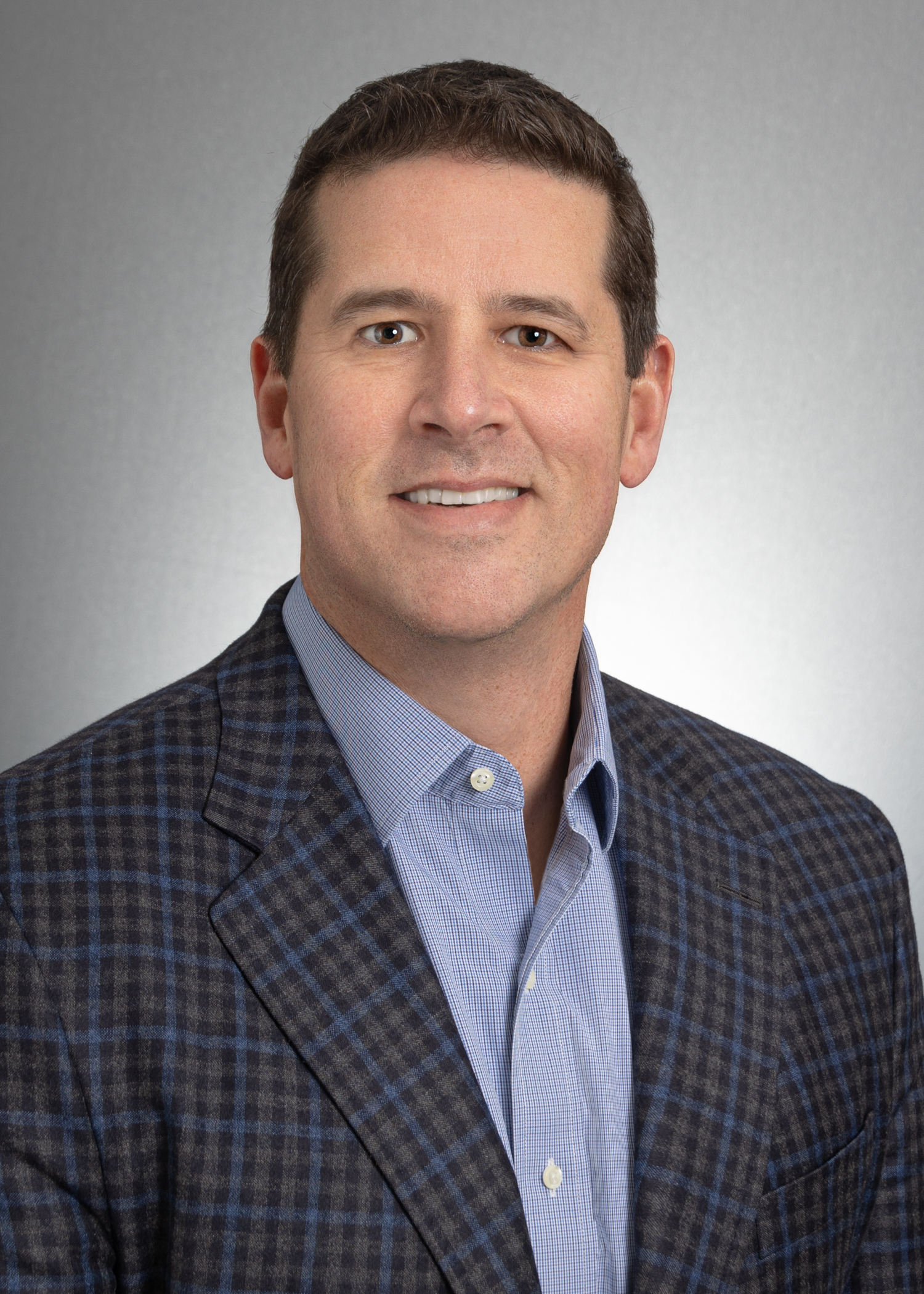
At the helm of this work is Shawn O’Neil, ViaLase’s CEO, whose 30-year career in ophthalmology has spanned some of the field’s most notable advances. Having built commercial teams at Alcon, Sight Sciences, and now ViaLase, Shawn has spent his career helping bring breakthrough technologies into everyday clinical practice. His leadership reflects the same qualities that drew VI to the company early on: a clear vision for how technology can meaningfully reduce patient burden, and a steady, execution-oriented approach to bringing that vision to market.
In this Q&A, Shawn shares the story behind ViaLase’s technology, the milestones ahead, and how the company is preparing to advance a new interventional era in glaucoma care. It’s a window into the future of ophthalmology—and into the kind of founder-and-team partnership that sits at the heart of VI’s work.
What first drew you to ophthalmology—and what inspired you to take the helm at ViaLase?
SO: It’s hard to believe, but this is my 30th year in ophthalmology. I started at Alcon in 1995, right out of school. My wife’s father worked there, and we had mutual friends, so I knew it was a solid employer in the Dallas–Fort Worth area.
What really drew me to the medical field, though, was the ability to help patients. When I got involved in glaucoma in 2008, I realized how meaningful it was to preserve people’s vision. Glaucoma is the leading cause of incurable blindness—a progressive disease with no cure yet. The opportunity to intervene and stop that progression felt deeply important.
I’ve always been driven to take on big challenges—things no one else has done before—with the patient at the center of every decision. Over the years, I worked on products like the Express glaucoma filtration device, the CyPass Micro-Stent (the first supraciliary device), and OMNI at Sight Sciences, which combined canaloplasty and goniotomy into a single, more efficient procedure.
Earlier in my career at Alcon, I launched LenSx, which was my first experience with femtosecond lasers—and that’s when I met Tibor Juhasz, the founder of ViaLase. When Tibor later called and said, “We’ve developed a femtosecond laser for glaucoma,” I thought, This is my perfect opportunity. It was a chance to bring a powerful technology to a disease that’s stealing people’s vision. That’s what ultimately led me to join ViaLase and help lead the organization in bringing this technology to market.
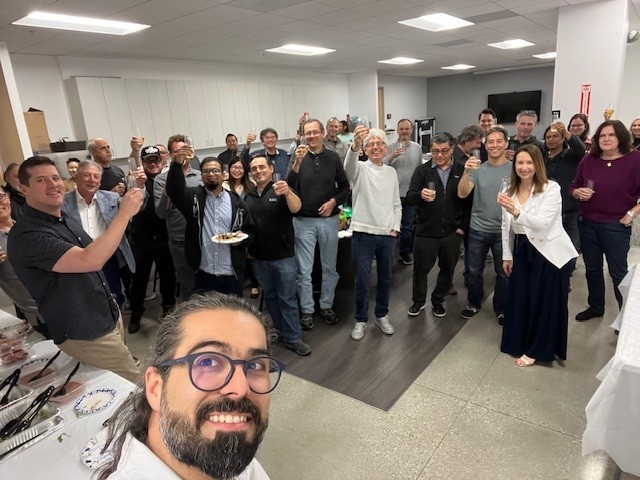
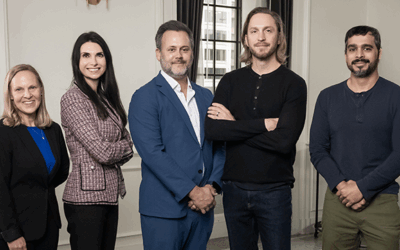
Photo: The ViaLase team
What was it like stepping into the CEO role following Tibor, and how are you building on the foundation he created?
SO: The first thing I tell everyone is that I can’t make a femtosecond laser—so I can’t do what Tibor does. He’s an extraordinary technical mind, but also a remarkable thinker. The way he approaches problems, identifies opportunities, and focuses on the most meaningful solution is truly inspiring.
What I bring, and what I think complements him well, is commercial experience—the connection between strategy and execution, between sales and marketing. I’m excited to apply that mindset more broadly across the organization, from R&D to operations, as we grow.
I was fortunate to spend three years working closely with Tibor before stepping into this role. That made the transition very smooth and allowed me to continue the great work he started while positioning the company for its next stage of growth.
How does ViaLase’s approach differ from traditional glaucoma treatments?
SO: In the simplest terms, the ViaLase approach is incision-free and noninvasive—it’s essentially a surgical-like procedure without surgery.
When we speak with potential customers, there’s immediate enthusiasm for the idea of a laser treatment that doesn’t require entering the operating room. That’s especially important for glaucoma patients, who are often diagnosed with mild disease. You want to intervene early to prevent progression—but without introducing new risks or complications.
Our FLIGHT procedure offers patients the potential for a surgical-like modality in a non-surgical setting. Patients benefit from both the effectiveness of the treatment and an exceptional experience: immediate visual recovery, minimal postoperative regimen, and a quick return to daily life. That’s a powerful thing for anyone facing an incurable disease.
Tell us about the Investigational Device Exemption (IDE) clinical trial and what success could mean for glaucoma care.
SO: We’re very excited to be executing our U.S. IDE trial—a randomized, controlled study comparing the ViaLase technology and FLIGHT procedure to SLT (Selective Laser Trabeculoplasty). SLT is another noninvasive laser procedure, but with a different mechanism of action.
This will be a 240-patient study—the largest glaucoma trial conducted outside of the original MIGS stent PMA studies. We’re confident this rigorous trial will achieve several things: support our efforts to gain a FDA clearance, and generate high quality evidence in support of our commercialization and market access strategies.
What’s been the most challenging—or rewarding—part of translating this technology into real-world use?
SO: The amazing thing about the ViaLase technology is its sophistication paired with simplicity. Our team has done a phenomenal job of leveraging our software platform to direct the laser, the gonio camera, and the OCT beams—all in a way that feels intuitive for the surgeon.
We’ve designed a user interface that allows a doctor to identify treatment locations and complete the FLIGHT procedure in just 10 steps. That’s remarkably efficient compared to most surgical procedures.
This accessibility means it’s not limited to glaucoma specialists. Any ophthalmic surgeon can use it within their skill set, which opens the door for many more doctors—and patients—to benefit.
What trends in ophthalmology or medical devices excite you most right now?
SO: The biggest trend I’m excited about is the shift toward an interventional mindset—what the industry is calling “interventional glaucoma.”
It’s similar to interventional cardiology: we’re putting procedural interventions first, with medications used as adjunctive therapy rather than the primary approach. This is especially meaningful for older patients, who often struggle with adherence to daily eye drops.
By providing effective, procedural options like ours, we can relieve that burden on patients, improve outcomes, and redefine the standard of care for glaucoma.
How has Venture Investors Health Fund supported ViaLase beyond capital?
SO: VI has been an outstanding partner. Jim Adox, in particular, brings a rare combination of business acumen, healthcare experience, and collaborative leadership.
The board as a whole has been incredibly supportive—but also highly engaged when we face pivotal strategic decisions or challenges. Jim has consistently made himself available, offering insights drawn from his experience with other portfolio companies.
A great example is HistoSonics. When we began our IDE trial at ViaLase, Jim shared that HistoSonics used their IDE trial to gain early insights into the facility payment to perform the procedure. We’re now executing a similar strategy, which is helping us model our business and reimbursement approach post-FDA approval. That kind of hands-on guidance has been invaluable.
What milestones are you most focused on in the next few years?
SO: Our number one focus is successfully completing the U.S. IDE trial. That data will form the cornerstone of our FDA submission and our commercialization and reimbursement efforts in the U.S.
Once approved, we’ll focus heavily on education—for both physicians and patients. Since we’re introducing a new category of procedure, awareness and understanding will be key to adoption. Ultimately, our goal is to reach every patient who can benefit from this technology.
Looking five years ahead, what would make you most proud?
SO: What would make me most proud is our team’s innovation—not just in the technology itself, but in how we solve problems.
Every startup faces moments when you feel like you’re climbing a mountain or pushing a rock uphill. What continually impresses me is our team’s ability to stay focused, work together, and find creative solutions that keep us moving forward.
Doing something big and audacious, something that’s never been done before, with a great team—that’s what makes this work so rewarding.
Learn more about ViaLase at vialase.com.
Note: This interview was lightly edited for readability.