By Joe Amaral, Chief Medical and Scientific Officer, Clarevia
When I first heard the term “precision surgery,” I, of course, thought it must have been coined by a non-surgeon who has never been in the operating room. Every surgeon believes they are being precise! But on reflection, I realized perhaps we are not as precise as we could be. For example, typical cancer surgery requires removing all the lymph nodes in the regional basin. This is despite knowing that the lymphatic system is one of the body’s most important defense mechanisms against the spread of cancer. We do this because some of those lymph nodes may contain cancer, but we aren’t able to determine which ones, and population studies demonstrate that removing them is the best approach for all patients. But could we be more precise?
We are being accurate, but not necessarily precise.
Precision vs. Accuracy
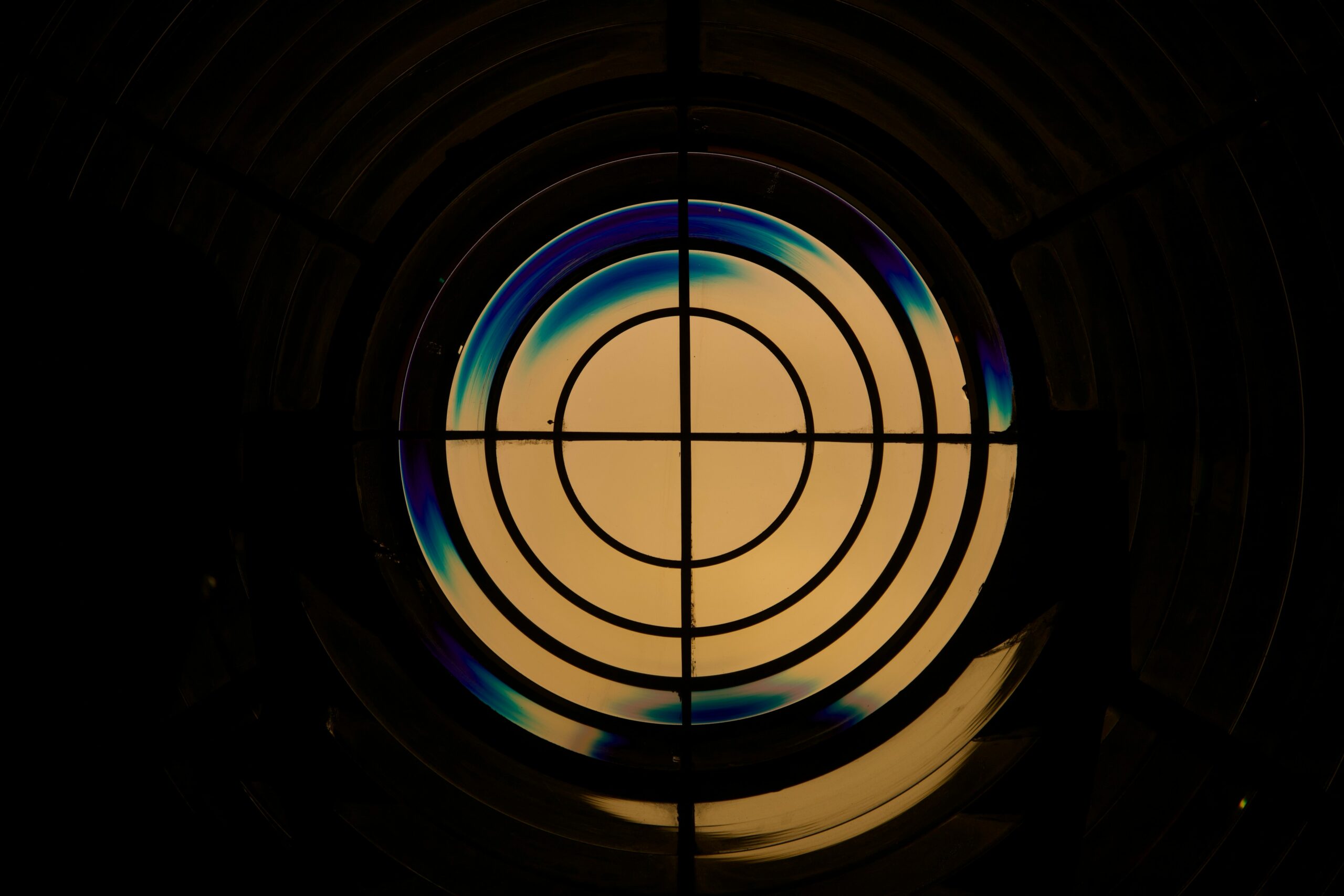
I’ll use a simple example. Say I’m throwing darts. I can throw four darts that all land in the same outer ring, their tips touching. That’s very precise, but it’s not accurate, because I missed the bullseye. If I’m accurate, I hit the bullseye, but the darts may be spread out within it. In the cancer example, we are accurate but not precise, and it may lead to unintended consequences. What we must strive for in surgery is to personalize the procedure to an individual patient’s characteristics rather than to those of a population. In essence, our goal should be to give the right treatment to the right patient at the right time to achieve the best possible outcome. In medicine, we are seeing meaningful progress, but in surgery, we are just beginning.
What Precision Has Meant in Surgery So Far
“Precision surgery” is an odd phrase. As a surgeon, I’m not going into an operation trying to be imprecise. But historically, precision in surgery has often meant being more meticulous: doing more, and doing it super carefully.
If you look at surgical practices in countries like Japan, China, and Korea, particularly in cancers like gastric cancer, there has been an intense focus on highly detailed, meticulous procedures, such as extended lymph node dissections. That level of attention has influenced standards of care globally. But there is still a gap. We still don’t know, in a specific patient, given their genetic and environmental factors, exactly what needs to come out and what should be left behind.
Moving Toward “Right,” Not “More”
That’s where I see the next evolution. There is emerging evidence that selectively removing lymph nodes rather than removing all of them may actually lead to better outcomes.
Companies are developing ways to measure and visualize cancer with far greater precision than what we use today. Instead of using a Geiger counter to approximate where radioactive signals are, we may be able to generate detailed images that show exactly where those signals are, including depth and location. That changes the procedure.
Instead of probing and removing broadly, we can target more specifically. We can remove what needs to be removed and preserve what should be preserved.
We’ve already seen this shift in areas like breast cancer surgery, where over the last 30 years, we’ve moved away from removing everything toward more targeted approaches. That’s what precision in surgery should mean.
The Three Forces Enabling Precision Surgery
Where I see surgical precision advancing is through the convergence of three things:
1. Visualization
Technologies like ultrasound, along with other imaging approaches, allow us to see what we couldn’t see before. That improves both accuracy and safety. It reduces adverse events and helps guide decisions in real time. There are also newer approaches using labeled molecules and other techniques, but fundamentally, improving visualization is critical.
2. AI and Decision Support
AI enables the analysis of large amounts of data to help predict what should and shouldn’t be done. In medicine, we are already incorporating genetics, molecular pathology, and environmental factors to guide treatment. In surgery, we are not yet fully doing that. What we need is the ability to determine, for a specific patient, what should be removed, and what should not. That’s still evolving, but that’s where I see the field moving.
3. Robotics and Data
Robotics adds another layer. It helps reduce some of the mechanical variability in surgery, but more importantly, it allows procedures to be captured as data. That means we can analyze what actually happened in a procedure, identify patterns, understand variation, and improve consistency in ways that are much harder to do from video alone. Over time, this shifts surgery from something highly dependent on individual skill to something more reproducible and consistent.
From Art to Reproducibility
Medicine and surgery, at their core, have always been an art. We rely on experience, judgment, and skill. Patients often choose physicians based on those attributes. But as we integrate imaging, AI, and robotics, we are moving toward something more reproducible.
It’s similar to what has happened in other fields. I may not be a great artist, but with AI, I can generate something that looks like a great piece of art. The question becomes: is the artistry in the execution, or in the vision? In surgery, we are starting to separate those two.
Remote Surgery and What Comes Next
Robotics also enables something else: remote intervention. Thirty years ago, I could guide someone through a procedure remotely, but only verbally. Today, with robotics, I can potentially control elements of that procedure from a different location.
The analogy I often use is aviation. Airplanes evolved from fully manual systems to highly standardized processes, then to systems supported by automation, and now to drones that can operate autonomously. Surgery is starting to follow this same path.
In the near term, where I see the greatest impact is access. These technologies can allow patients in less-resourced regions to receive the same level of care as those in major medical centers. But there are important considerations regarding ethics and human nature that must be resolved. For example, will patients be comfortable with a surgeon operating remotely? Is it ethical to perform a surgical procedure when the operating surgeon is not in the room with the patient? Can we take what is inherently individualized—understanding a patient’s biology, their condition, their environment—and deliver that level of precision across large populations? How will complications be handled?
Where Surgery Fits
Surgery, medicine, and radiation are all evolving in parallel. In surgery, the shift is from doing more to doing what is right. From removing everything to removing what matters. From art alone to a combination of art, data, and systems.
That is what precision looks like in surgery.
Read more Precision Medicine insights from the team.
Photo by Bernd Dittrich on Unsplash